

JapanDownUnder
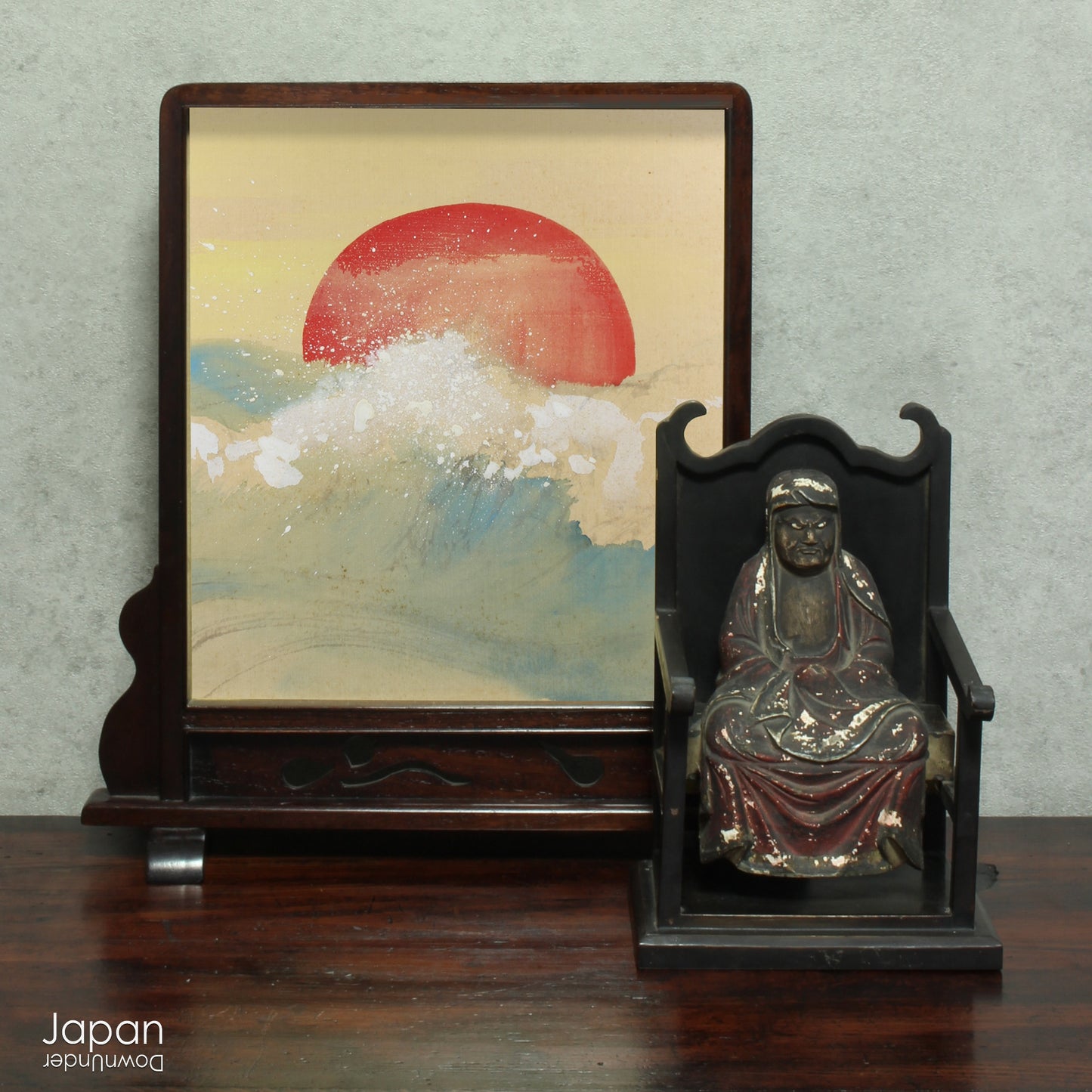
antique japanese painting on silk shikishi - red rising sun over crashing waves
antique japanese painting on silk shikishi - red rising sun over crashing waves
Couldn't load pickup availability
Love Japanese Style Like We Do
Infuse your home with meaning and vitality through this antique, hand-painted watercolor on a silk covered shikishi board. A vivid red sun rises over crashing waves - an iconic and powerful motif in Japanese art that symbolizes new beginnings, inner strength, and renewal. Whether you're a seasoned collector or simply drawn to pieces that radiate positive energy, this rare artwork offers both inspiration and serenity.
Rooted in centuries of tradition, shikishi boards have long served as elegant vessels for poetry, calligraphy, and art - gracing hanging scrolls and occupying places of honor in tokonoma alcoves of traditional Japanese homes and tea rooms. Often chosen to mark seasonal changes or auspicious occasions, they express a refined aesthetic sensibility and spiritual depth.
This particular piece, titled "Sunrise" is the work of Kitagami Seigyu (1891–1970), a Japanese artist associated with the Nihonga movement. Seigyu’s work beautifully blends classical techniques with modern nuances. The composition captures a brilliant red sun - emblematic of Japan itself and the Shinto sun goddess Amaterasu - emerging through a delicate mist above surging waves. The haze evokes the Zen idea of life’s intangible mysteries, while the restless water mirrors the energy and vitality within us all.
There is a quiet soulfulness that only antique pieces can offer - the soft fading of pigments, the gentle wear of time, the subtle patina from years of display and reverence. Framed and hung, this shikishi transforms into a contemplative and elegant focal point. Thanks to their standardized size, shikishi are also wonderfully easy to rotate with the seasons, allowing for an ever-evolving display and mood using the same frame.
This piece remains in good antique condition, with mild toning and light foxing that lend to its character. The silk board shows no insect damage or creasing and has been carefully dusted and housed in a protective cellophane sleeve made specifically for shikishi. For both preservation and presentation, we recommend professional framing - to support the delicate material and to highlight the timeless story it tells.
A meaningful piece of art and history, this shikishi invites contemplation, beauty, and a quiet sense of renewal into any space it graces.
- measures 242 mm (9.5”) x 272 mm (10.7”).
- weighs 70 gm.
(listing for the shikishi art board only)
(If you are buying more than one shikishi, or a shikishi and a frame, please contact us for a shipping discount prior to your purchase. We cannot discount after the transaction has been completed)
SHIPPING INFORMATION
- please read our shipping notes in shipping policy.
- we use recycle packaging and wrap for safety, rather than appearance.
ABOUT OUR VINTAGE, ANTIQUE AND OTHER ITEMS
We list pieces we feel are worthy of display. There may be scratches, dents, fading and signs of wear and tear. We try to explain the condition of each item exactly, but may miss something.
Information regarding the item and it’s age is obtained from dealers and our personal research. We do our best to give you the correct information but please be aware that we cannot guarantee this information.
Please message us prior to purchase with any questions you may have about our products.
ABOUT SHIKISHI
The history of Japanese shikishi is a rich blend of calligraphy, painting, poetry, and gift culture that spans over a thousand years. The word shikishi literally means “colored paper” or “decorated paper,” but historically it refers to square, thick paperboards used for calligraphy and poetry.
- In the Heian period (794–1185), shikishi were used mainly for waka poetry by court nobles. They were often lavishly decorated with gold or silver dust, dyed backgrounds, and hand-painted motifs such as flowers or clouds. The paper was mounted onto scrolls or albums and exchanged among poets, functioning as both an artistic medium and a token of friendship or admiration.
- In the Muromachi period (1336–1573), Zen influence encouraged more minimalist designs, with elegant brushstrokes and subtle backgrounds.
- In the Momoyama and Edo periods (late 16th–19th centuries) shikishi evolved from purely calligraphic works into painted art boards, featuring seasonal landscapes, birds, flowers, and famous scenes from literature. They became a common medium for haiku poetry, particularly among followers of Basho and other haiku masters.
Samurai, tea ceremony practitioners, and wealthy merchants began collecting them as art objects and shikishi were often displayed in the tokonoma alcove of a tea room, or traditional Japanese tatami room, reflecting the season or occasion.
- Today, shikishi boards are mass-produced with a hard backing and a gold border, still used for calligraphy, ink painting (sumi-e), autographs, and messages. Artists continue the tradition by creating hand-painted seasonal scenes, sometimes with a short poem or proverb.
KITAGAMI SEIGYU
Kitagami Seigyu was born into an artistic extended family in Hokkaido, northern Japan, far from the artistic centers of the country. Determined to excel, he made his way to Kyoto, where his talents allowed him to study under the great Takeuchi Seiho, a prominent figure in the Nihonga movement. This led to many entries into prestigious exhibitions, including the Teiten.
Share